No Raspberry Pi 6 Before 2028, the Pi 5 Remains the Go-To Platform
Wed Jun 03 2026
No Raspberry Pi 6 Before 2028, the Pi 5 Remains the Go-To Platform
The Raspberry Pi 6 won't arrive before 2028. On May 21, 2026, Eben Upton, co-founder and CEO of the Raspberry Pi Foundation, answered questions from internet users during a Reddit AMA alongside his two CTOs, James Adams and Gordon Hollingworth. The topic everyone wanted to know about: when is the next Pi coming, and what can we expect from it?
The answer was crystal clear: not before early 2028. The usual cycle between two Pi generations is around three to four years — the Pi 5 was released in 2023, which would have logically placed the Pi 6 sometime between 2026 and 2027. However, the Foundation has decided to take its time, mainly due to soaring LPDDR memory costs on global markets. It's a very real economic constraint rather than a lack of technical ambition.
Evolution, Not Revolution
Good news for those worried about a major shift in direction: Eben Upton was very clear about the roadmap. The Pi 6 is expected to offer "very similar features and form factor" to the Pi 5, with more CPU power, greater memory bandwidth, and improved I/O performance — but without any radical architectural changes. No integrated M.2 slot, no built-in AI NPU. The Foundation remains committed to its philosophy of delivering fast, affordable CPUs rather than specialized single-purpose chips.
This stands in deliberate contrast to the leap from the Pi 4 to the Pi 5, which introduced far more substantial changes — including the complete removal of the 3.5mm audio jack, present on previous generations and absent from the Pi 5. The Pi 6 is not expected to bring that kind of surprise.
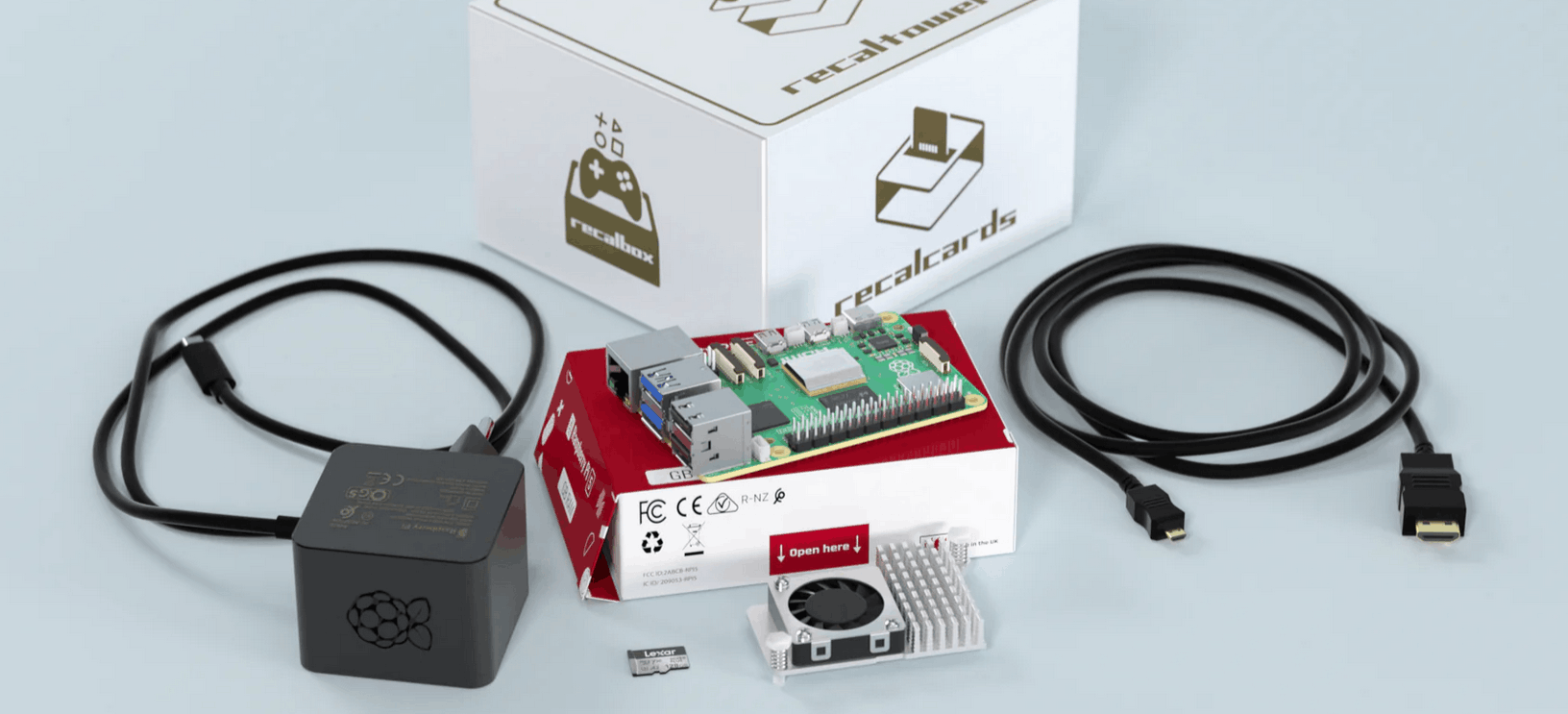
What This Means for Recalbox Users
In practical terms: you're set for quite a while. The Raspberry Pi 5 still has a long and bright future ahead of it, and it's precisely the platform we've focused our efforts on over the past several months. We obviously continue to support the Pi 0-2, Pi 3, and Pi 4 (the Pi 2 and first-generation Pi Zero are currently limited to Recalbox versions 8 and 9), but the Pi 5 remains our recommended platform for the best Recalbox experience — and it's the only platform compatible with our hardware lineup: the RGB Dual 2, the RGB JAMMA 2, and the brand-new Recalbox JVS.
Regarding RAM, one clarification is worth making: there's no need to opt for the 8GB model. We've optimized Recalbox so that the 2GB Raspberry Pi 5 can run the entire Pi 5-compatible catalog without any limitations or slowdowns. In fact, that's the configuration we recommend for the Recalbox JVS. The 8GB version remains useful for other purposes, but not for Recalbox. As for the 4GB model, which is more affordable than the 8GB version, it is also an excellent choice for Recalbox.
The Foundation has confirmed that the Pi 5 will remain its flagship model for at least another two years. For us, that's excellent news: a stable, well-understood platform that we can continue to build upon and optimize without being overtaken by a new generation before we've finished.
Sources: OMG! Ubuntu, Geeky Gadgets, TechGenyz, Reddit AMA r/engineering
Enjoying the work of the Recalbox team? Support the project by becoming a Patron!

Kommentare
Noch keine Kommentare.